Showing posts with label Sales and Marketing. Show all posts

Friday, June 12, 2015

HOW TO HIRE SALES REPS

In this 3D Laminate Blog I try to write articles that are specific to the 3D Laminate Industry however from time to time I do write about Sales, Specification and other tops. Often I do research and this is the best way to obtain data. I came across an amazing article on sales reps and rather than recreate the wheel I'd like to cite an article by Zorian Roten berg


HOW TO HIRE SALES REPS
When you are hiring new sales reps, what traits are you looking for?
I use the 5 below which have worked for me time and time again. And an in-person interview is your best way to test for these top 5 and below I will also share with you how to spot them. So here they are:

1) Conscientiousness

This research on sales rep performance published by the American Psychological Association way back in 1993 found that the most predictive indicator of sales rep success is “conscientiousness.” Conscientiousness simply means achievement and dependability. We also can refer to it as “hard work until you get it done,” also known as “GSD” (i.e. Get S**t Done, implying that getting things done comes with a goal and the dependability to achieve it). Candidates who are conscientious are goal-oriented, hardworking, persistent, and have high expectations for themselves – exactly what you want in a sales rep.
When you find a candidate that fits this description, you can count on them to not only set goals, but also to set a high bar for themselves and make a great effort to reach that bar. They’ll be able to work autonomously. Conscientious sales reps do really well with data transparency – when they have access to their own sales performance data, they can track and adjust their efforts in real time.
Testing for Conscientiousness:
But when it comes to interviewing candidates for your sales team, how do you gauge conscientiousness? Ask them to tell you about a time they set difficult goals. What did they do to stretch themselves and achieve these goals? Let them walk you through the process and purpose. If they can show they’re goal-oriented and results-driven, they will likely put in a lot of effort and do well on your sales team.

2) Coachability

While hard work and conscientiousness is important, the most successful sales candidates will find a healthy balance between that self-starter attitude and an ability to turn coaching into results.
Mark Roberge, HubSpot’s top Sales Executive, ran an experiment where he looked for specific attributes during sales interviews and measured over time which of these attributes actually correlated with success. He collected over 1,000 interviews and hired more than 60 people before doing his first analysis. What he found was that Coachability was the #1 predictor of sales success at HubSpot. 

Testing for Coachability:
One of the best exercises to test for coachability in an interview is to run a roleplay. Ask them to sell something simple to you, like their phone or the table. Spend a few minutes pretending to be a prospect while they deliver an elevator pitch and answer some of your questions. Then, ask them to reflect on the roleplay: what did they do well and what did they not do well? Candidates who are open about and unafraid of their weaknesses tend to be the most open to coaching. Next, tell them what to do differently next time. Do they get defensive or stressed, or do they receive feedback well? It’s a great sign if they take notes on your response. Then, have them do the roleplay again and see how well they apply your feedback.
So, what does this mean for you as a sales leader? You need to hire coachable reps and then dedicate time to actually coaching them. Well-coached sales teams consistently outperform the competition and improve forecasting accuracy. Moreover, your reps want to be coached because they want to develop their professional skills. It may be a serious time commitment, but prioritizing coaching has proven significant, long-term benefits.

3) Intelligence

In order to be coachable and smart about sales, a rep must be intelligent. Sales is a data-driven field, so successful reps can analyze sales data and make smart decisions based on their analysis.
Testing for Intelligence:
Good indicators of intelligence include your candidate’s academic and workplace experience and achievements, including GPA – but remember, those can be arbitrary. I’ve found that a great question to ask in an interview is: “In five minutes, could you explain something to me that is complicated but you know well?”
It can be a hobby, something technical… anything they want. Their response will tell you not only how well they can comprehend complex subjects, but also how well they can articulate them to someone who doesn’t know much about the subjects. To succeed in sales, your candidate will need to explain your product, technology, and ideology to people who are mostly unfamiliar. That question will show you how naturally this comes to them – and it’s a sneaky way of gauging intelligence.

4) Prior success

This is critical because you want someone who has shown a track record of achievement.  It doesn’t matter in which area – and even someone graduating from college can show that either in academics or at sports or hobbies.
Testing for Prior Success:
This is easy – just look at the resume. Or look at their academics and grades if the candidate is fresh out of college. It’s easy to see. Also, Inc. magazine published an article recently called, “The Only Interview Question That Matters.” The question was: What single project or task would you consider your most significant accomplishment in your career to date?
Even more important than the question itself is the follow-up questions you can ask, like “Walk me through the plan, how you managed it, and its measured success,” “What were some of the biggest mistakes you made?”, “Give an example of how you managed and influenced others,” and “What would you do differently if you could do it again?” It’s amazing how much insight you can gain about a candidate by spending 5 minutes asking questions about their #1 accomplishment.

5) Passion

Hire candidates that have passion for sales. And I suggest that you look for someone passionate about your company’s mission, too.
Testing for Passion for Selling:
Ask your candidate why they want to go into sales. Ask them what books they’ve read about sales, which sales blogs they read regularly, and what excites them about sales. People tend to succeed doing things they really like, so a passion of sales can be a good indicator of success.
Testing for Passion for Your Company:
You also want sales reps who are passionate about working at your company. It is really important to be clear up front about your company’s mission, culture and purpose
You can gauge their passion and selling savvy by what questions they ask you when given the chance. Are they well-thought-out, difficult questions? That can give you a clue into whether they will maintain high interest in your organization over time. Ultimately, the candidate that will succeed on your sales team will passionately engage with you on this subject.

These 5 characteristics of successful sales candidates might surprise some of you. What about years of sales experience or industry knowledge? Think about it: those traits can all be learned, but none of them are inherent. The most successful sales reps have high potential because they possess the 5 characteristics I’ve listed. Those are far stronger at the core than something that can be easily learned.
Sometimes it is tempting to hire a candidate that looks fantastic on paper with tons of experience even if they didn’t pass the 5 tests above. But the cost of turnover is high and you don’t want to screw it up. Hire the most dependable, goal-oriented, coachable, intelligent, and passionate people and you are guaranteed to build a world-class sales force.
If you are big organization and you’ve hired a lot of reps, I’d love to hear if you try these so let me know how these traits correlate to performance (especially Productivity Per Rep – PPR) of your most successful reps.   For example, you can run a few simple regression analyses to correlate the sought after traits (which can be tracked during and after the interview) with performance of your reps. A number of companies including Hubspot have run such analyses and many of us agree on most of these 5 as strong and consistent predictors of success in inside sales.

Wednesday, July 9, 2014

What a business can learn from an Eagle

In a previous article: "What a business can learn from an Octopus", I spoke about the intelligence of the Octopus and drew comparisons between the Octopus and niche manufacturers in North America.  I gave specific intelligent tactics that the Octopus use for survival and then compared that to tacts that a manufacturer could use in positioning their product or services.


Living here in Florida, its not uncommon to see a Sandhill Crane or a long legged Heron walk around as they hunt for worms or geckos. If you live near large trees or the water it is also normal to hear the squawk of a Hawk. But seeing a Bald Eagle is always a bit more rare. I think most people stop with awe when they see this beautiful bird glide through the air. Aside from being our National Bird, its simply a remarkable animal. But what tactics do the Bald Eagle use for their survival and how can we draw comparisons that can be learned in business?

(and before we begin, save any joke about Mark, the author, being bald and writing about the bald eagle until after you have read the article in its entirety, you get why at the end)

BE AN EAGLE 
RARE:
So we know that Eagles are rare and that its a federal crime to kill a Bald or Golden Eagle. Felony convictions face a maximum of $250,000 and misdemeanor convictions can face up to a $5,000 fine. In business, being unique and serving a specific niche is key to most small businesses's survival. If you are a custom manufacturer of components (for example) is it your lead time, your profiles or what specifically make you rare in your segment? Its important to be as rare as possibly but remember that if you are too rare that extinction could be a prediction. A little competition actually creates more overall awareness for a given product segment. And its the hard times that build the Eagle's character.  Its important to serve an industry where you know you're the Eagle rather than the pigeon or even worse a buzzard. A pigeon pecks at the ground for scraps, a buzzard feeds on the dead. Be an Eagle.


FEARLESS:
Eagles have amazing hunting strategy and can be cunning. Have you ever witnessed a video of an Eagle throwing a goat off a cliff as a killing tactic?  If your business is to survive and flourish you must have the courage to be different, to focus on creating value for your clients in every way you can. If you are a sales person you have to accept rejection and understand that  you will often get a "no" or face rejection. But what we all do is not life or death, so fear of rejection is silly albeit natural. When Eagles mate they lock talons and copulate while falling to the ground. Its called the spiral of death however, its shows that they love how they live, without fear. Even how Eagles learn to fly is done with a specific flare.  Momma Eagles gather an Eaglet on their back and soar high. When they glide to ground they do so gradually and gently so that the Eaglet gets the feeling for their wings as they drop to the ground.  Eaglets can be a metaphor for new hires, new ideas or new products. Its important to soar high but be there to catch your eaglets to make sure they don't fall to the ground and die. But flying is a must for growth and ultimate survival so if an Eaglet refuses to fly, the Eagle rips apart the nest and nudges them off the cliff.  The Eagle knows when the time is right and so should you. You must know when to launch your Eaglets when YOU feel the time is right no matter how much they cling to the nest. Remember, you've already let your Eaglets get a "feel" for their wings, you've already fed them, nurtured them and when its time for the world, rip apart the nest and nudge them off the cliff if they refuse to fly. And since Eaglets are born and bred to fly. Feel the pride when they soar.

AMAZING VISION
Eagles pick the highest spot in a terrain and the keep a sharp eye out for their prey. They can spot prey the size of a rabbit from 2 miles away !  But as a human, its not eye site ,  mental vision is our key. To have mental vision, we must see far into the future of to predict the needs of our clients. We must develop the vision to see what colors will become the new market standards and see the way to developing the business for the market rather than scavenging for the business created by others. Although its impossible to always be the originator of every idea, if you make your business solely on the copying of others by duplicating other's designs , profiles or work you are modeling your business on a different animal (such as the pigeon or the vulture) rather than the Eagle. Its not impossible to create a business solely by copying others however eventually if your competitors find a way to protect their work you may find yourself unable to adapt to becoming an original when you've spent so much time bottom feeding. In other words, you could become extinct.Remember that pigeons peck and fuss about and vultures bottom feed. Eagles soar to new heights and find new prey. Eagles are game changers and pay no mind to pigeons. If your business is always nipping at the competition by price, you may want to ask yourself  why you do not believe your product or service is worth the market price and try to find how you can improve upon your quality, service or value proposition.

HIGH FLYERS
When a storm comes, Eagles use the air current by flying directly towards the storm and the wind lifts them like a rocket as they fly up above the clouds.  In business, downturns can happen, markets change, new competition arises. Instead of giving up, laying low or seeking shelter, why not face the challenge like the Eagle. Instead of hunkering down, fly up to get a 10,000 foot view and look for new opportunities that only an Eagle could see by climbing to that height. The office industry is an example of this. Many office furniture producers became Healthcare furniture producers as the office industry became more competitive in past years. When the storm settled and other Office furniture manufacturers came out from their shelters they noticed that the companies that were thriving the most were the ones that diversified in an intelligent way. These diversified companies are now strong in Office and Health Care.
ENDURE
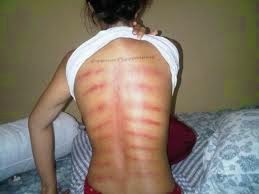
At about the age of 30, Eagle's bodies begin to deteriorate due to their age.  It has been reported that some Eagles do something completely amazing when they get 30 years old, they retreat to a mountain top and over a 5 month period they rebuild. The eagle knocks its beak on the rocks, plucks out their talons and then all their feathers. When they emerge they are revitalized and can life up to another 30 plus years. Think humans can't do this? I'll never forget back in the 90s when I was visiting Indonesia. I witnessed an Indonesian woman become ill and her friend took her into a room and raked a coin down her back till it was covered in welts. When they emerged from the room, her back was completely red and you could see the raised skin. Although years prior, I lived in Malaysia for nearly a year my Malay / Indonesian was very limited but I do believe they used a word similar to "Kerokan" to describe the technique they were doing with the coin. I deduced that this simply created shock on the largest surface area organ of the body "the skin". And the back is the best place for this technique. Although I had never heard of this before, my mind is always open to learning from others and I could only reason that the damage done to the back is a way to hyper stimulate the immune system into hyper drive. Whether its a technique similar to acupuncture or whether its a placebo, the body's ability to heal itself is unquestioned.

So in reality, humans have the power of an eagle. But alas, Western society has taught us to drug up, take antibiotics and after all, aren't we supposed to live the life of a pigeon and not the Eagle? But we can be Eagles !

And since plucking the feathers out for the Eagle actually makes them stronger  and they are reborn, I decided a few years back to shave my head.  As mentioned, in the beginning of this post, to reserve your joke till the end. ... OK, so I noticed the feathers on top just weren't as thick as they once were and I began to feel less youthful just as I'm sure the Bald Eagle experiences when it turns 30.  So although I did not pull out my talons or bang my beak on rocks, I figured the least I could do would be to shave my feathers (hair) completely off and start anew. So thats how I prefer to see my bald head.  So, aren't you glad you waited before emailing me a joke on the irony of me writing about the bald eagle? Now you know, its not simply male pattern baldness..... but the evidence of someone who faces the reality of their age and takes the control to rejuvenate. (cue rolling eyes)

So won't you join me in becoming a bald eagle? Shave your head.....no?  Or at the least, fall in love with this beautiful animal and embrace its ways into your life and into your work. Be an Eagle.


Saturday, June 21, 2014

How to use dead stock or overstock to negotiate pricing with furniture buyers

In the company I work for, Dackor, occasionally the company has overstock /dead-stock of some items. I am sure that other suppliers also have this problem at times. In this article I'd like to give a strategy on how furniture manufacturers or component manufacturers can use Dackor's or other suppliers overstock or discounted items to increase margin or also to protect existing products.

First I'd like to explain what overstock is and why it occurs.

1. CANCELED PROJECTS: If a supplier of laminate has a project that cancels that does not mean that it is easy to find another project to use that specific color.
2. OFF COLOR: Sometimes in production, the color can appear in range by computer but visually the color may stand out as being too off from the target. So this is another case where overstock can occur.
3. CHANGING MARKETS: Finally there are cases where colors just simply stop selling so the company could end up having too much inventory for the demand.

OK, so now is the time to talk about how as a cabinet, furniture or component manufacturer you can use overstock which is discounted to protect their margins on their normal items.

SCENARIO: Lets imagine that when bidding out a large job using a good selling color we'll call "Top seller". The GC or buyer may say to you, "I'd like to go with your company but you need a tighter price". Now in some cases you'll stick to your price and loose the bid but in many cases you may find that you lower your price for certain GCs or buyers who pay well or who you have a long standing relationship with. But.... have you ever been in a situation where you have refused to lower your price and they stuck with you?

So the question is "When should I lower my price?"

STRATEGY: One strategy to use is to counter to a requested price reduction for a project with "OK, we can lower our price but we'll need to use an Overstock Color that we can obtain for less money". The buyer may counter with "No , we want to get a lower price but keep the "Top seller" as the spec.  What are they telling you when they say this? They are basically saying that price is not the most important thing but rather , they have a need and that need is that specific color.

In all negotiations its important to know where you stand. If your company has promoted that color, had many successful jobs done with that color then there is a lot of effort that has gone into the past to build up both your company's name and also the demand for a specific color you are putting on your product.

RESULT: What you may find is that when posed with the option "OK we can accept the different color at the lower price" this means that price truly was the most important factor for that project or client. However, "If the company counters with "Never-mind we will stick with the existing "Top Seller" and pay the price you quoted" it means that their request to have you lower your price was actually a bluff. They had their mind set on that color and also in using your company.

OBSERVATION: Its important to observe your past bidding habits. If there are some GCs or accounts that you find yourself lowering your price for even when selling your "Top Seller" or other standard colors then keep in mind that you would have lowered your price anyway. So if they do choose to go with the Overstock Item that costs less you may be able to recoup some of your losses in margin. So what we have just discussed here is how to use colors to negotiate.

SECURING LAMINATE: The key to the above is to understand your company well , your client well and also have good communication with your supplier of laminate. You need to make sure that your supplier of laminate is willing to hold their overstock for you till you can secure it for the project, you need to know what will happen should you need more laminate and finally you need make sure that a key person in your company is negotiating with your GC or buyer to explain the costs of making your product but its not necessary to give exact costs as often the laminate alone may not explain the discount, however keep in mind that these are based upon discounts you would have taken anyway.

MAINTAINING MARKET: Another thing to note is that by not discounting your "Top Seller" that you do not ruin the market price for this color or simply lower your price for no reason. You may find that if budget project start using that laminate and generally use the lowest bidder and the least expensive materials that in essence their projects will be less appealing. It doesn't take long before your good customers who are willing to pay a fair price for your product will see this "Top Seller" in budget applications and slowly move to other colors and possibly other suppliers who only focus on supplying their type of company.

SUMMARY: I hope that this post helps your company to discover a new way of using colors to protect or stabilize your margins. If you are a manager, bidder, or purchaser and you have questions about this please contact me. I am dedicated to not only marketing colors but in helping companies to become more successful and profitable.


Wednesday, August 15, 2012

How we stand in the way of our own success in sales

Some of my most popular posts in this blog have been based upon sales and marketing.  In this article I'd like to explain how some companies impede their sales by putting too many constrictions on their success.

THEORY OF CONDITIONAL SUCCESS
In life too many people place conditional limits on their success. An example would be to say something like "Whenever I get a promotion, I'm going to start coming in to work early" or "Whenever I sell all the dead stock of this ugly maple I'll bring in a new maple". With conditional success we put limits on succeeding and tie them to things that are completely unrelated or in some cases they are even conflicting to the success. As you can see above, it may be a good idea to start coming in early in order to get the promotion now. Or in the case of the dead stock, the fact that one item is not selling has no correlation over whether or not the new maple will or will not sell.

WE ARE VEHICLES FOR THE DELIVERY OF DESIGN
Think of me or yourself as a vehicle to deliver a color or design. The market itself may or may not accept a new color or texture however the less restrictions we put on that discovery the better. Some restrictions can be things such as:

"I dont' like this color but its up to you". If you think of about it, your like or dislike of a color should never be forced on a client. Imagine if you sold cars at BMW and someone who liked blue cars came in and test drove a new 7 series and you commented "Its a nice car, too bad its blue". Taste in color is a personal opinion and its also about awareness. Because you are unaware of how to use a color in interior design yourself does not mean its impossible to make it look good. The consumer knows better what they want.

"I have too much inventory". The market itself does not care if you are carrying too much inventory of dead items. Imagine if you have too much dead stock of green or Sanibel maple and so you use this as an excuse not to bring in new items. The market itself may have demand for particular colors however the market itself has no care over how much dead inventory you or I have of non selling colors. Not bringing in new colors because of having too many old colors is a version of conditional success. Its like saying "I will start selling more new colors whenever I get rid of the old colors that are not selling" One has nothing to do with the other. I am not suggesting that you over extend yourself but its important to identify if we are in fact putting limitations on ourselves and then examine it.

THEORY OF FALSE CORRELATION
The theory of false correlation is where we draw conclusions based upon seemingly correlated facts however in truth there is no direct correlation. Imagine if you are a component producer who has been around since the 90s and most of your colors are HPL matches. I could show you a new Tafisa match and you could bring it into your stock and have no sales. You may say "This color doesnt sell" however thats a false conclusion because it could be a top 10 seller for me. A more accurate statement would be "I dont currently have many customers who use Tafisa board and most of my clients are refacers" That would be an accurate conclusion and therefore explain the poor sales results for that color. So by creating false correlations we operate business based upon false data and then make decisions based upon false data. Clarity and understanding of the market is key.

BAD POLLING RESULTS
Sometimes I have spoken to door producers and I've heard them say "Well I just put the door out on my counter display and we will see if the market likes it". Does this accurately depict their entire customer base or just the refacers who pick up the doors themselves personally? Its clearly a selected demographic of just their counter sales and not of their entire sales. Its quite possible that their cabinet customers who are decision makers may not pick up their doors personally and may have them delivered. So the sampling is skewed. Dont feel bad about poor polling though.... Whenever you watch or read the news listen to their poor poll results. They will draw conclusions about public schools based upon a poll they did in Manhattan. Not exactly a national sampling to draw any type of consensus.

POOR LIMITATION OF SUPPLIERS
Another thing I will commonly see is when a company may buy all their laminate from one company. When I ask them about this they say "Well we like so and so sales rep" or "Their freight costs less" or "We like to consolidate our suppliers". Although when we are the company exclusively supplying them it seems great but at what expense? The overall success of our customers is the most important factor and laminate should not be purchased the same way that you buy boxes. Each laminate supplier will have a list of top 10 sellers and the reality is that sticking to just one supplier can hurt your sales over all. There is definitely some merit in focusing on 2 or 3 suppliers to get purchasing power or to demand more service and to diversify however sticking to one supplier will only limit your growth except in rare circumstances.

LIMITATION OF SAMPLES
Another thing one can do to limit sales is to having too few sample chains. If you ever find that you do not have enough sample or literature and you are selected which interested buyers do or do not get samples then this can cause a severe limitation in sales. Its an example of a way we can stand in our own way to selling more.


PREMATURE DELETION OF COLORS FROM STOCK
Another example of how we can hurt ourselves is by premature deletion of colors from the stock line up. Imagine if a laminate, board or door company takes on a new color and it can take 6 months to a year to first create awareness by distribute the samples and then the market itself must be timed properly for that shade of color. Tastes change and imagine if a board company releases a color too soon, takes 6 months to get samples out, distributors dont take the color into their line and then the color is deleted before it becomes relative. Its difficult to do however the timing of colors is critical and that is to have the right color be released at the right time to create relevance. If a board company discontinues an item, under most cases this will kill the 3DL sales.


NOT ENOUGH SALES REPRESENTATION
Most component, laminate and furniture producers in this industry do not have enough sales representation. The problem with this is that it means that our sales become limited to a core group of customers or based upon existing demand. I often notice that if we have a duplicate to another film company or in many cases they have a duplicate to ours that suddenly our sales will grow. Logic would suggest that if I were the only one to have this color that I should get all the sales but its quite the contrary. The market movement of more people promoting colors creates a larger over all market. By not having enough sales representation we limit our sales to only the existing demand and no new fresh business is created or discovered.


CONCLUSION
In conclusion, the key for us all is to step out of the way of ourselves in order to let the market and the colors do the work. By eliminating conditional success, holding our opinions to ourselves, diversifying supply, distributing adequate samples and being patient and consistent we can better discover if a color has potential or not.


Wednesday, March 7, 2012

Virtual Image Creation

Have you ever looked at a car brochure and thought of how amazing the brochures are? Now look at a typical cabinet or furniture brochure and it pales in comparison.

Over the years I have noticed that the European cabinet and company brochures were always more nice than the North American counterpart. What I discovered a few years back was that these high quality images were created using virtual images. Virtual images create images from scratch using modelling softwares, shading and coloration to create images from scratch. This gives not only life like images but when done properly the images actually turn out better than a photo that you could take.

Dackor not only makes and stocks 3D Laminates to specification but we also market heavily in a variety of ways. One way we market our laminates is through our catalogues and website; yet another way is through calling on Architects and designers. Now we have added the capability to create Virtual Images in house at discounted rates which enable our customers to have amazing images created that can market product without the cost or space that a display takes up.

Please browse the images at:


Please let us know if you have any questions.

Thursday, September 8, 2011

"THE MARKETING of COLOR"

If your company markets components, melamines, laminates, kitchens, store fixtures or even consumer products, I think you will find this article "THE MARKETING of COLOR" to be of interest. Since we are all in the business of figuring out what consumers want, exploring the history of color, how trends are created and how distribution affects color develop is highly relevant. Its hard to be a predictor of future trends however after you read more of how I analyze past trends, I think you'll see that some predictions can, in fact, be made towards future color trends.

HISTORY OF COLOR
As a fellow human, certainly you can attest to how important color is to our daily lives but think about how important color was to early man. The decision to eat one food over another and the color of poisonous snakes for example could literally determined if you survived to produce offspring. Interpreting color and making predictions could be a life or death situation. As a result, humans have certain innate reactions to color that seem to, in general, be universal across cultures. Lets examine more about the history of colors and how they evoke emotions today.

RED: If you look at the color red it typically has two very different feelings; pleasure and danger. If you look at food, strawberries can be sweet and safe to eat yet Hawthorn's red berries can make you sick. This creates a dual emotion that Red can be a volatile color that could create pleasure or pain. Another example of red, are red lips. Red lips in most cultures signify that a woman is fertile and is therefore loosely translated to passion. Today red lipstick is used not only as a cultural decoration but its origins can be traced far back in various civilizations. Another place red was seen in the history of humans is on the battlefield. Red blood signifies the calamities of war which could be disaster if you were on the loosing side but you might feel elation after winning a war and getting to live another day.

Red is a very common color used by certain consumer products to invoke passion however many companies such as financial companies avoid red entirely as it signifies danger or loss. When companies are loosing money they are known to be "in the red" for example.

GREEN: Green typically signifies "wealth". Imagine all of our years growing crops and living off the green of the land. Land use to be viewed as the single source for survival and hence the color green signifies money and wealth. Starbucks is a successful company that uses Green and a symbol that looks like a coin. Have you ever thought that Starbucks sells the aspiration to wealth rather than only selling coffee. Books have been written on the success of Starbucks and how vital green was to their overall success.

YELLOW: Just like Red, yellow evokes dual emotion. One is of hope, happiness and sunshine and the other is in betray or deceit. We all can understand that the sun represents hope and brightness but why is yellow often seen as the color of deceit or betrayal? For thousands of years the color yellow has signified betrayal in most cultures (but not all ) however some trace the yellow color to certain deseases and illnesses that have plagued humans from the beginning. I won't elaborate too deeply in this short article however I may expand examples in future articles.

BLACK: Black typically signifies power, authority, fear and death. When you take any color to its darkest value it becomes black. If you can imagine ancient mankind and how a decomposed body turned black or how a crop or home might be destroyed by fire would be black. But the most moving evidence that early man might be afraid of black would be from when the sky turns black. Today black also signifies authority such as in a suit or when a judge wears a black robe rather than a yellow one for example.

BLUE: Blue can be most closely related to Water and the sky. Do you ever feel more peaceful simply by looking at water or the sky? I know I do... Ancient humans always felt safe when they lived close to water because we can live for weeks without food but only a few days without drinkable water. Insurance companies, banks and even 3D Laminate companies often use the color blue to make people feel safe in using their product. Do you use a particular company due to their color unknowingly?

HOW WE PERCEIVE COLOR:
In a previous article I wrote called "Understanding the Language of Color", I went into depth about various things that affect how we perceive colors. I won't go too deep in this article however I will say that how we perceive color is not always accurate... For example, think of the "area effect". To understand the area effect, imagine making a match to a large 2' X 2' board and then looking at a small 3" X 3" match to that board. At first glance you may think the larger board is more light however what if you found out that you were in fact looking at the exact same color!? Simply by looking at a larger piece is creates an accumulation of color in your eye (so to speak) that gives you the perception that it is lighter than the other. In summation, there are various situations such as metamerism, the area affect and others that can make human perceive color differently from situation to situation.

ANTITHESIS TRENDS
The Mirriam Webster dictionary defines a trend as "A general direction in which something is developing or changing". But what is an "Antitheisis Trend"? First I should say this is a Markism or in other words a definition made up by myself... (you're free to laugh at or with me here) Due to my passion for marketing and exploration of marketing trends I often come up with situations in which there does not exist a marketing industry term. Previously I had come up with the term "Gain Leader"; opposite of "Loss Leader" and I've received a lot of positive feedback on this new marketing term and perspective. Getting back to the Antithesis... My definition of an "Antithesis Trend" is "A new trend created by the desire for change away from the current trend". If you ask a music executive or clothing designer if they have ever experienced an "Antithesis Trend" they would first ask you what it meant and then after you gave them the definition they would immediately point at you and say "Yes ! Thats my reality. "

In the Music Industry, lets examine some examples of Antithesis Trends. Before you think I've gone on a tangent, trust that I will tie this in to how color trends can also be affected by this. Next I will take you on a journey from the 1950s music through 2010 and show how a desire for change drove new trends and then give specific examples of musical artists and how they benefited from the trend change.

Early 1950s; This era was made up primarily with Crooners. This romantic singers appealed to love, relationships and courtship. Artist such as Buddy Holley were big in the 1950s and to say that the decade was full of G rated love songs would be an understatement. Whats the opposite of a G rated love ballad by a Crooner? Elvis...

1956/1960s; When Elvis first appeared on the Ed Sullivan show on September 9th, 1956 with his sexual innuendos and gyrating hips he put a nail in the coffin of the days of the Crooner. Elvis was extremely talented but he was also at the right place at the right time. Elvis mixed the Blues with Crooners and became the Antithesis of the Crooner trend. That is until.

1970s; Disco and the Bee Gees.. Disco brought in an era of excess, drug use, disco balls and dance. Although Elvis had smooth moves of his own, Disco brought in an error of the individual dancing. It is a bit difficult to draw an exact correlation of how Disco was the opposite of Elvis however one can certainly argue that Disco dominated the 70s and that it was very different to say the least.

1980s; Hair Bands. Motley Crew. When the 80s music scene came it as if someone turned out the lights and took the disco ball home. "No more disco for you" they probably grumbled as they exited out the back door of Studio 54. Bands such as Motley Crew and Warrant wore make up, teased their hair and did not come close to breaking out into dance as in the days of disco. It is easy to see how the Hair Bands were the Antithesis of Disco until...

1990s Grunge Rock. Nirvana. From the moment I saw the video "Smells like Team Spirit" and cought wind of the growing Seattle Grunge movement I knew that Hair Bands were simply uncool. Think of how Grunge is actually the opposite of hair bands and make up. Many in the Grunge music scene avoided showers and there were no sequins or makeup to be found. Is it possible that Grunge became popular BECAUSE it was the opposite of Hair bands?

2000s Rap/Bling. Tupac. What is the opposite of a white guy from Seattle who believes in minamalism? Hmmm. Well certainly the opposite of Grunge Rock is Rap featuring videos with gold chains, cars and excess. Rappers are the new rock stars....they say...

ANTITHESIS TRENDS can be witnessed in the music industry over the past 60 years and one could argue that no new fad would have quite the impact if people weren't so darn tired of the past trend. It could be argued that if you want to know whats going to be big, just figure out whats the opposite of whats hot now.

Color Trends Antithesis: Many laminate colorists often discuss how when an economic market declines that darker colors become more popular. Our best seller for the past four years has been Wenge which is a dark woodgrain and certainly one can argue that its in line with what colorists have been saying. On the flip side, colorists also say that lighter colors tend to become more popular during economic growth. This has been applied to laminates however it becomes more complicated when we look at cars or fashion. But in a bigger sense, its important to understand how trends can be created based upon using a feeling for the bigger world around you.

MASS THOUGHT'S EFFECT on COLOR TRENDS
Mass Thought or Mass Consciousness essentially means that there are common thoughts shared by your community that are influenced by religion, culture and socio-economics. As a human you share many common thoughts and each person influences mass opinion through his or her vote or opinion towards a given subject. We have all heard of the "butterfly affect" however mass thought is much more easy to describe and understand. Above I mentioned how trends can be created by the general public desire for change (Antithesis) away from a current trend and I've also given a history of color and how our emotions are influenced by our preconceptions about what colors mean to us. What if I gave a test and where I had a picture of a red ball and a blue ball and then asked the general public "Which ball do you desire more". Wouldn't logic tell you that it would be 50/50? What if you found that the 70% desired the red ball? How would explain it? What if you had a society who was sick and tired of taking chances and dealing with products that did not work and then gave them the test whereby 70% then chose the blue ball? This is a theoretical question and no such study has been done however if you understand color more deeply and if you have spent much time studying consumer trends then you can start to see that such a result may be possible.

The DISTRIBUTOR EFFECT.... on COlOR TRENDS
The next area that can affect a color's success is the Distribution of that product. Imagine that you are a colorist for a melamine board producer and your job is to select colors that will be a hit in the market. Of course you will consider the following:

1. What you are seeing at trade shows. Example: textures
2. What has been selling more in the recent past. Ex: dark colors, warm tones
3. What has not been selling in the recent past. Ex: Items with knots
4. What the market is asking for. Ex: Less movement in the wood speciesand more linear
5. What you believe your distributors will buy into

What would you add?
So you start to ask yourself questions such as "Will the market like it?" "Whats in my line now?", "What trends are coming?", "What trends are going?" and then finally "What items can I get my distributing customers to buy into?" Now imagine that the distributors make a comment such as "I don't have anything in a warm honey shade ..." Bingo. Now if you find a wood species that is linear, warm in tone, looks good with that new ticking texturing you just launched, doesnt have knots and one of your key distributors thinks it will fill his line. Now you've got something.

Now of course I've just simplified the process for the sake of this article but think about the importance of a Distributor for any product line. Do you think that Ford considers their dealerships when creating new cars? Of course its a consideration since they will be preordering the inventory.

In addition, imagine that you are going to buy a sedan and you really want a black Camry and then you go to a few Toyota dealers in your town but they are all out of black Camrys but they do have black Avalons which cost more. It could be that the Distributor might have known that there is a demand for black sedans and so he intentionally stocked more black Avalons since they were a higher margin car. Now imagine deciding to go ahead and buy an Avalon because you really really wanted a black Toyota sedan. Now imagine that simply by Toyota allowing the Avalon to be a higher margin car and then knowing that black luxury sedans sell better than gold ones and then mysteriously black Avalons outsell black Camry's 2 to 1 yet Camrys outsell Avalons. I call this the Distributor Effect...A truly powerful persuasion on the outcome of color sales.

CONCLUSION:
As we examine the MARKETING of COLOR we can clearly see that how humans interact with color can be based upon our preconceived feelings that are on a primal level, based upon trends , Antithesis trends, Mass Thought and even based upon the Distributor Effect. The Marketing of Color sounds like a crap shoot but the more you examine humans, the market and human behavior you will find that its not only possible to predict color trends but to actually create color trends.

Friday, July 29, 2011

Are PET Laminates more green than PVC Laminates?

What's the next bubble? According to Gordon Gekko in the second edition of Walstreet: Money never sleeps its "Green Energy". A bubble or economic bubble suggest that prices are odds with the intrinsic values. The biggest phenom that surrounds bubbles are the herd mentalities of humans. People often follow trends irregardless of their truth or values because they feel safer with the herd. Certainly we can see that there is just a chance of an informational bubble as an investment bubble surrounding any herd movement.

Rather than tackling the subject "What is Green", for this article I won't to simply analyze PETs and PVC and their green-ness or lack thereof.

PVCs VS PET LAMINATES:
As most of this blog's readers know, I have been very active in 3D Forming Laminates since the mid 90s, I guest speak at tradeshows and symposiums and I am constantly looking to further the entire industry as a whole. Whenever I see a competitor do a good job I am quick to praise them to mutual customers. In fact, whenever a competitor or a PET gets a new project it is not only good for our mutual customer to get that business but its good for our industry as a whole.

One word.... Plastics.
First lets discuss the origin of plastics. Have you seen or do you remember the phrase in the 1967 movie, "The Graduate" where Mr. Maguire gives advice to the young man Ben played by Dustin Hoffman? Mr. Maguire gives the fatherly advice to Ben "I have one word to say to you.."Plastics". Since that time so many products have been produced in plastic or plastic based products. Certainly as we are all aware, the PVC pipe that pumps water for your shower or your drinking water is all "plastic". The wires that run throughout your home are all plastic. But where did the non-PVC movement start?

See the clip "One word. Plastics"


The backlash of Plastics.
In the 1990s I remember Europe going through a phase where they tried to reduce the consumption of PVC. This was caused primarily by countries who had limited space and they were forced to burn their trash. During that time all the students in the US where hearing how bad PVCs were. I am sure that many vowed to not specify PVCs when they would become architects or designers. Flash forward ten to fifteen years and now these former University students are now decision makers in the design community. But in Europe they have now gone back to PVC... Why? The reality is that PVC is easier to produce and also it consumes less energy than PET for example.

Can you burn PVC?
The fact is that PVC is not safe to burn without an extremely sophisticated filtering process. Here in the US we bury our trash and both PVC and PET take a lot of years to biodegrade. PVC or polyvinyl chloride is a vinyl polymer constructed of repeating vinyl groups having one hydrogen replaced by a chloride. The real danger comes when your house is on fire however it should be added that your carpet, furniture, drapes and other items in your room can also be harmful to inhale if they are on fire. In fact, a forest fire or natural products like tobacco are dangerous to inhale. See the perspective....So in general if your house is on fire you should leave immediately.

Do PVCs release harmful VOCs?
Volatile Organic Compounds or VOCs are a large group of carbon based chemicals that easily evaporate at room temperature. While most people can smell high levels of some VOCs, other VOCs have no odor. Odor alone does not indicate the level of risk from inhalation of a harmful VOCs. There are however, thousands of different VOCs in our daily lives. Some examples include:


· Acetone

· Benzene

· Ethylene glycol

· Formaldehyde

·

Methylene chloride

· Perchloroethylene

· Toluene

· Xylene


PVC laminates are tested to ensure that they do not have harmful levels of any of these products. Also as I mentioned above, all the water that you shower with and that you drink is pumped to you by PVC pipe. Wouldn't reality tell you that if PVC were harmful it would most likely reach you by showering and drinking a liquid that comes in direct contact rather than through a house-fire or through fumes coming off the wiring in your home? I don't see anyone calling for a boycott of showers.

PVCs are everywhere.
In a typical home PVCs can be found in children toys, tools, fabrics, in a wrist watch, in the pipes that pump water for you to shower or drink with and even in the wires powering the computer you are reading this article with..... . Quick .... Grab a hammer and smash your computer now !!

Are PET Laminates more green?
It depends upon your definition of green. In fact, PETs require much more energy to produce and to process in the lamination process. By consuming more energy, more CO2 is released into the atmosphere. In addition, PETs cost an average of 20% more. The reality is that most industries choose the easiest way to process product. PVC is in fact easier to process for both the laminate manufacturer and the furniture manufacture so it can be said that PVC has a comparative advantage over PET in terms of most consumer products. If PET were easier to process, consumed less energy and worked as efficiently then certainly they would be promoted more.

Can PVCs be recycled?
PVCs can be recycled contrary to all of the sites published by certain organizations to state the contrary. The reason that its falsely believed that PVCs cannot be recycled is that most consumer centered facilities are geared around recycling PETs and PPs for example. PVC cannot be mixed with these plastics and this is one issue. Some examples of companies who recycle or use recycled PVCs are:


How more cost is less green:
Another point to consider is that the more an item costs the more energy it cost to make. Above I mentioned that PET takes more energy to produce but that is due to its hardness and heat levels required to produce and form it. What I am saying here is quite different. Money is representational of time and energy. Higher costs translate into higher carbon footprints. You won't read this anywhere because most people don't equate money with being representational of time or energy.

If something costs more then somewhere in the cycle of that product someone is paying more. That means that someone needs to work longer hours in their office burning electricity or drive their car to yet ten more potential customer in order to pay more for the green product. The point being is that if a product costs more then someone will have to utilize more time, money and energy in order to pay for that product. As a society we have yet to measure the increased carbon foot print of paying more.

Should you sell or promote PET Laminates?
The answer is yes. Surprised I am saying so? The reality is that if there is a demand then it is in the best interest of any given company to give the customer what they want. If I am to use logic to protect PVC, I would also use logic to protect the bottom line of my customer. Listening to customers and their wishes are at the top of all of our lists. Who knows, I may some day be selling a laminate that uses recycled plastics, costs less and will form 3D. I'm being asked for it every day. So even though I defend PVC we all have to use logic.

If you have any questions about this article please feel free to contact me or visit http://www.vinylinfo.org/ for more information.

Wednesday, October 6, 2010

Leather White Alligator

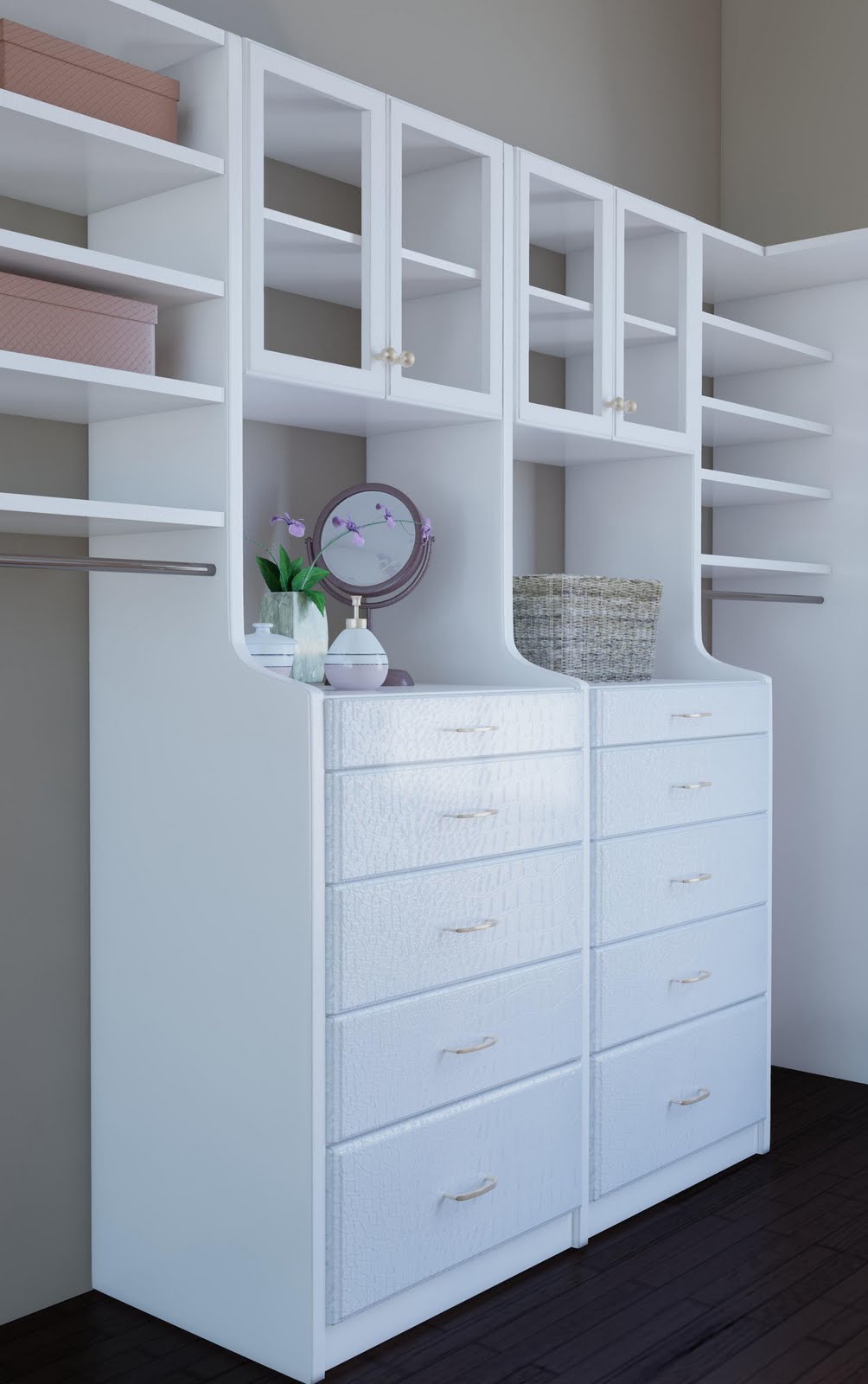
DACKOR introduced Leather White Alligator. Many said that they believed that this would be extremely modern however, as you can see from the picture below it works well in a Transitional environment. As you are aware, Transitional Style refers to Traditional or Classic style but with a Contemporary Twist. Transitional style works in the urban cities as well as the mid-west or the rural south.

Please note that in addition to looking good, Leather White Alligator incorporates Frosty White Melamine and edge-banding and therefore reducing the cost of the Closet manufacturer. In addition, its an easy way to refresh a showroom since these drawer fronts can be put on an existing display.


Wednesday, July 28, 2010

The words we choose matter: Selling Thermoformed Components

In the past I have written a lot of articles pertaining to refacing, to independent reps, about colors, and as well as Sales & Marketing. This post is about how the "Words we Choose Matter" while selling or dealing with customers.

Since I was a kid I've always been interested in Marketing. Most people think of marketing as just "advertising" however Marketing involves so much more than advertising and sales. One aspect of Marketing involves the careful delivery of messages from sales people to customers.

Have you ever noticed how one sales person will be pushy whereas some will be inquisitive and ask a lot of specific questions and then try to actually address your needs?

The idea of sales is to use words to elicit information to help our customers see things different than they may have before. But the critical thing is that the words we choose make a huge impact.

In the past I have read a study that suggested that the words you choose can actually affect how you feel. So lets imagine that just from habit you always say "That pisses me off". Its a very strong statement whereas "That irritates me" is a much softer tone. Some studies suggest that when you use strong words your heart rate will actually increase and your anger will elevate to meet the words that you just chose. Its so interesting that the words you choose can have an affect over how you feel. So do you believe that the words you choose could have an affect over clients? Of course they do. Lets use an example.

Imagine that you are presenting a new color on a door to a customer and you had to choose from the following statements:

1. This new color could sell well for you
2. This new color may sell well for you
3. This new color should sell well for you
4. This new color will sell well for you

How do you feel about the use of the words "could, may, should or will"? Could represents that neither you, nor the customer nor the color has any affect over the potential for that color selling. Could is a powerless word that means that it is subject to outside variables beyond any control. This is a dangerous word to use. The word "may" is slightly better but just by a bit.
The word "should" is the ideal choice of words. The reason is that it implies humility but it also interjects that some action would need to be taken such as promotion or proper presentation. The word "will" is dangerous. By using the word "will" you may be over promising or over selling the potential for that color. The customer may feel that you are not genuine. If you use the word "Will" then you make sure that it does.

Below are other examples:
OBVIOUSLY: If you use the word "obviously" with a client, are they hearing "Well if its obvious then do you feel I'm stupid?"
BASICALLY: Does this indicate that its too hard for you to understand or too hard for me to understand?
CANDIDLY: OK so you're usually lying
TRUST ME: The customer actually hears "Don't trust me"
HONESTLY: The customer actually hears "I'm dishonest usually"
HOW'S IT GOING? The customer hears "I don't care how you're doing"
NO PROBLEM: The customer hears "So you think my issues are not worthy of concern"

Some words that you may consider for the Component business are:
UPCHARGE: "That will be an upcharge". Consider just saying "that will be extra". Extra sounds like you're getting more while "Upcharge" sounds like you're simply being ripped off.
RUSH CHARGE: Consider using the word "Rush Fee". Fees are not good but is slightly softer than "Charge".
CHEAP: Consider using the word "Inexpensive"
THERMOFOIL: Consider using the word 3D Laminate, Polyveneer, Laminate, 3DL, or create your own name
GIRL IN THE OFFICE: Consider using "Customer Service".

As you can see above, the words you choose can have an obvious affect on how people perceive what you are saying.

We should all remember that "Customers may not always remember what you say but they will always remember how you made them feel"


Sunday, October 4, 2009

Let DACKOR build your website, logo and branding

For a limited time offer, DACKOR will be offering FREE Marketing services in exchange for your company adding new colors from our company.

Its important to promote new colors.... why not get world class marketing assistance?

Packages prices are:

BASIC: $2500
Includes basic website and search engine optimization. With this option you simply order five or more 55 yard rolls of new colors and receive a basic website free of charge. The web site will be search engine optimized so as to give you the best visibility in your local market.

ADVANCED: $5000
Includes advanced website development, search engine optimization, advanced logo / corporate branding and training on how to maintain your website going forward With this option you simply order ten or more 55 yeard rolls of new colors. This is a $15,000 value and a great deal.

TERMS:
This is for a limited time, first come-first serve basis. Since we are in the business and manage this in house you can be sure of quality. For questions please contact us at 407-654-5013. We can create a custom package for your company.

Even if you have already paid to have your site done... talk to us, allow us to look over what you have and we may still be able to help.


Wednesday, August 5, 2009

Wood Terms for Veneers or 3D Laminates

Last month I spoke about linear wood designs and outlined the difference between rift cut oak and quartersawn.

Often as I speak to our customers about the design elements we incorporate in our 3D Laminates I use terms such as cross-firing, pine knots and so forth. For this month's blog I'd like to list a complete dictionary of common used terms in regards to the design of wood grains.


3D Laminates

3D Laminates are laminates that are able to form 3D around contoured MDF panels. They are primarily used for Kitchen Door and Drawer fronts as well as Desk tops and Store Fixtures. 3D Laminates are extremely popular in Europe due to their look of real veneers, ease of cleaning and durability. They are growing in popularity in North America for use in closets, apartment and condo projects.

Bird's Eye

Birds Eyes are caused by local sharp depressions in the annual rings, accompanied by considerable fiber distortions. Once the depressions are formed, succeeding growth rings follow the same contour for many years. Rotary veneer cuts the depressions crosswise, and shows a series of circlets called bird's eyes. It occurs only in a small percentage of Maple trees.

Bee's Wing

Small and tight mottled figure similar in appearance to a bee's wing. Occurs mostly in East Indian Satinwood, also occasionally in mahogany and eucalyptus as well.

Blister

Produced by an uneven contour of the annual rings. The design

has the effect of being blistered. Must be cut rotary or half-round.

Block Mottle

An irregular variegation in the cellular structure of the wood which shows as blocky patches across the grain of the design. It is commonly found in makore and anigre.

Book Matching

Typically for veneers. Achieved when successive veneer leaves in a flitch are turned over like the pages in a book and are glued in this manner. Since the reverse side of one leaf is a mirror image of the succeeding leaf, the result is a series pairs. Individual panels can be matched this way or you can achieve this look over many panels by sequence-matching the panels. Book matching is the most common match. A common problem in book matching is when the "tight" and "loose" sides are matched and reflect light and stains differently. This may yield color variations in some species which may be minimized by proper finishing techniques.

Burl Design

Produced from a large, wartlike growth on the trunk of the tree. The grain pattern typically resembles a series of eyes laid side by side. Very difficult to work with in the veneers but easy to accomplish with 3D Laminates.

Butt Matching

Achieved when veneers are matched as described for book matching but the ends of the sheets are also matched. At times, the veneer being used is not long enough to cover the desired panel heights. In this case the veneer leaves can also be flipped end for end and the ends matched.

Button Figure

Wood species with large medullary rays are quarter cut to reveal the harder and shiny rays which show up as flakes or buttons on the straight grained background.Species such as white oak, lacewood and American sycamore are cut this way specifically to reveal this figure.

Cathedral

A grain appearance characterized by a series of stacked "V" and inverted "V". Pattern common in plain-sliced (flat-cut) veneer.

Center Matching

Each panel face is made with an even number of flitch sheets with a center line appearing at the midpoint of the panel and an equal number of veneer sheets on each side of the center line. The number of leaves on the face are always even, but the widths are not necessarily the same.

Checks

Small slits running parallel to the grain of wood, caused chiefly by strains produced in seasoning.

Cross Fire

Figures which extend across the grain as mottle, fiddle-back, raindrop and finger-roll are often called cross figure or cross fire. A pronounced cross fire adds greatly to the beauty of a wood design.

Crossbar

Type of figure or irregularity of grain resembling a dip in the grain running at tight angles, or nearly so, to the width of the wood design.

Crotch Veneer

Produced from the portion of the tree just below the point where it forks into two limbs. The grain is twisted, creating a variety of flame figures. Often resembles a well formed feather. The outside of the block produces a swirl figure that changes to full crotch flame figure as the cutting approaches the center of the block.

Crown Cut

See Flat Cut (below)

Curly Figure

Found mostly in Maple or Birch, and is due to the fibers being distorted and producing a wavy or curly effect in the wood.

Exotic Wood Veneer

A common reference to wood veneers not indigenous to or grown in North America. Some burls and figured woods might also fall into this category.

Fiddle Back

A fine, strong, even, ripple figure as frequently seen on the backs of violins. It is found principally in Mahogany and Maple; cut occurs sometimes in other woods.

Figure

The pattern produced in a wood surface by annual growth rings, rays, knots, deviations from natural grain such as interlocked and wavy grain, and irregular coloration. Appears across the grain. Mottle, fiddleback and raindrop are often called cross figure or cross fire.

Flake, Fleck

Figure

Flake figure is developed only in those species which have very heavy medullary ray growth, specifically Oak, Lacewood, and Sycamore. When the saw or knife cut is directly on or near to the radial, it is close to parallel with the medullary ray and therefore develops the "Flake" effect.

Flat Cut

When the wood is cut flat to reveal the cathedrals of the wood. Because each leaf in the flitch is similar, a consistent and even matching pattern is possible.

Flitch

A Section of a log made ready for cutting. After cutting, all bundles are laid together in sequence as they were sliced.

Grain

Size and arrangement of the cells and pores of the living tree. Grain is not synonymous with figure. Woods fall into three groups: Fine grained (Birch, Cherry, Maple, etc.), medium grained (Walnut, Mahogany, etc.) and coarse grained (Oak, etc.).) Coarser grained woods can usually be cut to develop a more conspicuous pattern.

Gum

Patches or black spots occurring primarily in American Cherry. This undesirable characteristic is acceptable in varying degree in most grades of Cherry.

Half Round

Slicing

Similar to rotary peeling, also producing a high yield with the wood. Used primarily to add width to narrow stocks by increasing the plane of cut. Also used to enhance a particularly wild grain pattern. Matching is possible because the leaves can be kept in sequence.

Hardwood

General term used to designate lumber or veneer produced from broad-leafed or deciduous trees in contrast to softwood, which is produced from evergreens or coniferous trees.

Heartwood

The non-active center of a tree generally distinguishable from the outer portion (sapwood) by its darker color.

Herringbone

Veneer strips are used and matched to both sides of the center line, at an angle. The resulting appearance is reminiscent of the bones of a fish as they are attached to the back bone.

Holes, worm

Holes resulting from infestation of worms.

Joint

The line between the edges or ends of two adjacent sheets of veneer or strips of lumber in the same plane.

Knots, Pin

Sound knots 1/4 inch or less that do not contain dark centers. Inconspicuous or blending pin knots are barely detectable at a distance of 6' to 8', do not seriously detract from the overall appearance of the panel, and are permitted in all grades.

Knots, Open

Opening produced when a portion of the wood substance of a knot has dropped out, or where cross checks have occurred to produce an opening.

Knots, Sound, Tight

Knots that are solid across their face and fixed by growth to retain their place.

Mineral Streak

A dark patch or discoloration in the wood which occurs because of the presence of minerals in the soil in which the tree is growing.

Mottle Figure

A variegated pattern which consists principally of irregular, wavy fibers extending for short distances across the face. If there is also some irregular cross figure in a log with a twisted interwoven grain, the broken stripe figure becomes a mottle.

Peanut Shell Figure

A type of figure occurring in some woods similar to quilted or blistered figure. These woods are typically cut to promote a random and wild grain effect with a three dimensional feel. Occuring most commonly in Tamo Ash and Bubinga.

Pecky

Pockets of disintegrated wood caused by localized decay, or wood areas with abrupt color change related to localized injury such as bird peck. Peck is sometimes considered as a decorative effect such as bird peck in pecan and hickory or pecks in cypress.

Pin Knot

See Knots, Pin

Plain Sliced

See Flat Cut

Pommele Figure

Comes from the French word, "Pomme" (Pomme = Apple). The term given to a regular wood marking which resembles apples.

Quarter Slicing / Cut

This cut requires the largest diameter logs and produces straight grained veneers. The quarter slicing of oak can result in the appearance of flake.

Quilted Figure

A larger , more exaggerated version of pommele or blister figure. The cellular figure is elongated and closely crowded giving it a pillowy three dimensional effect. It is most commonly found in Maple, Mahogany, Moabi and Sapele.

Random Matched

/ Planked

A panel having the face made up of specially selected dissimilar (in color and grain) veneer strips of the same species to stimulate lumber planking.

Raw Veneer

Wood veneer cut from any log by any slicing method that is dried and then used as a natural flitch or leaf of wood. Much production and machining of this veneer has to be accomplished prior to the final application to a substrate.

Reconstituted Veneer

A man-made veneer which uses real wood fiber with natural colorants to simulate various color, figure and grain seen in real wood veneers.

Ribbon Stripe

Result of quarter-slicing a log and the appearance actually is between broken stripe and plain stripe. It gives the general appearance of a ribbon sometimes slightly twisted.

Rift Cut

Produced by cutting at a slight angle to the radial to produce a quartered appearance without excessive ray flake. The rift cut method, commonly used for Oak, can only be used on sizable logs. Rift cut veneer can easily be sequenced and matched.

Ropey Figure

If the twist in the grain of broken stripe is all in one direction, a rope figure results.

Rotary Slicing

The log is turned in a circular motion against a knife, peeling off a continuous thin sheet of wood (like unrolling wrapping paper). It is the most economical method of cutting wood, or in wood print

Sapwood

This is the outer portion of the tree. As additional layers of growth accumulate on the outer perimeter, the inner layers of the sapwood becomes heartwood. Sap is lighter in color and the differentiation in color and thickness of the sap layer varies considerably by species.

Streaks, Mineral

Natural discolorations of the wood substance.

Swirl Grain

A lesser degree of crotch figure. The grain tends to swirl around in a random pattern. This figure frequently appears in cherry, mahogany, walnut and maple.

Veneer

A thin sheet of overlay. Typically this term is used as an abbreviated form of "Wood Veneer". Wood Veneers are typically rotary cut, sliced or sawn from a log or flitch. Veneering goes back to the early days of the Egyptians, about 3,500 years ago and as since developed into more efficient forms of laminate and 3D laminates which give the look of a Wood Veneer but with increased design capabilities, lower cost and higher durability.